A sump pump fails at the worst time, which is during the storm that fills the basin fastest. An installed sump pump costs roughly $600 to $2,500 according to 2026 national cost guides, and the pump is the part of a drainage system everything else depends on. Here's why pumps fail, how to test yours, and why a battery backup is the most important addition.
Why Sump Pumps Fail
Sump pumps fail for a short list of reasons.
- Power loss. The storm that floods a basement can cut the power, and a standard pump stops with it.
- A stuck float. The float switch tells the pump when to run, and a float that jams against the basin wall never starts it.
- A clogged intake or discharge. Silt and debris block the intake, and a discharge line can clog or freeze.
- An undersized pump. A pump that's too small for the water keeps up in ordinary rain and falls behind in a storm.
- Wear. Pumps wear out, and one that has run often through wet springs can fail without warning.
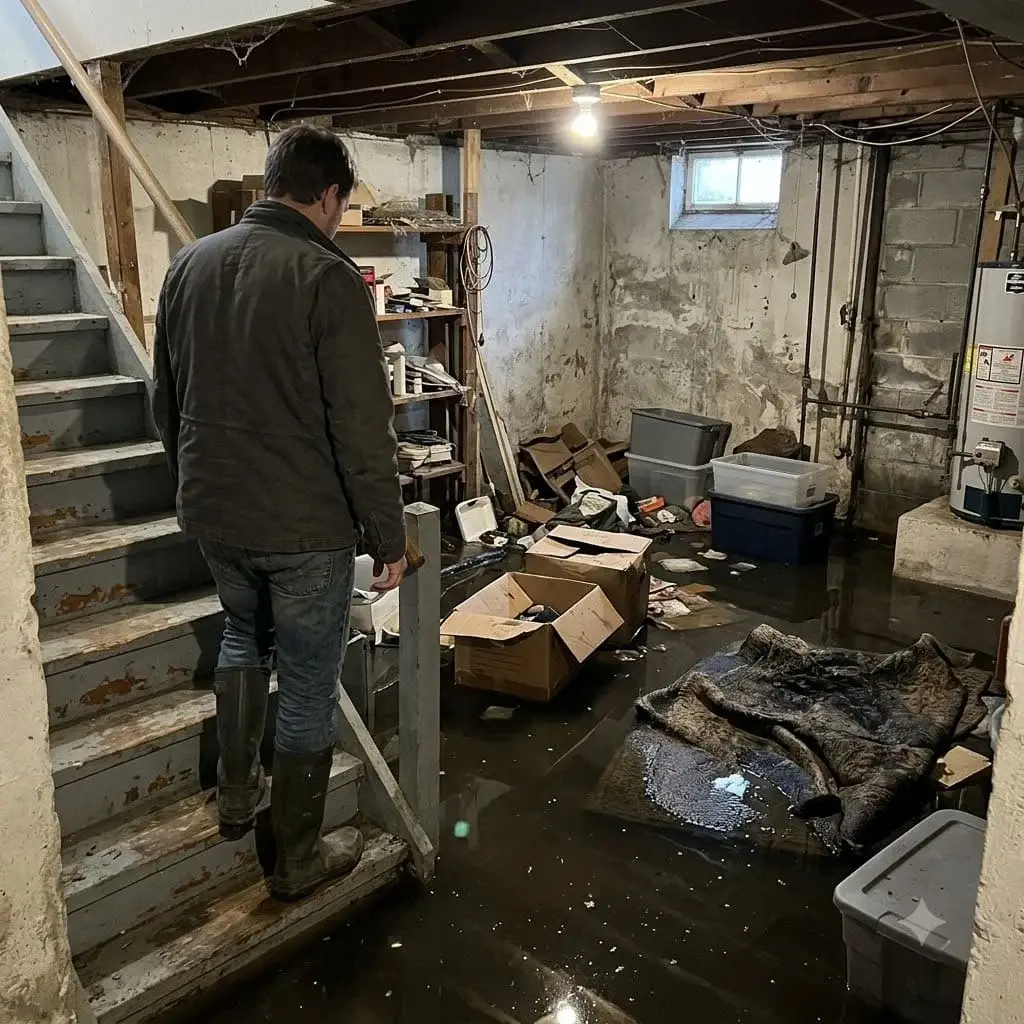
The power failure is the one people don't plan for. The April 17, 2026 flash flood sent storm runoff into Janesville basements, and a pump with no backup stops the moment the power does.
Why Janesville Pumps Work Hard
The Afton-Janesville weather station records about 37 inches of precipitation and about 37 inches of snow in an average year, and March through June brings about 14.7 inches of precipitation. Spring pumps run often, because snowmelt and rain arrive together. A January average low near 12°F also means a discharge line can freeze if it's not pitched and routed to drain. A pump that runs hard in spring and sits idle in a frozen winter needs checking before the wet season. For the weather side, read our guide to spring snowmelt and freeze-thaw.
How to Test Your Sump Pump
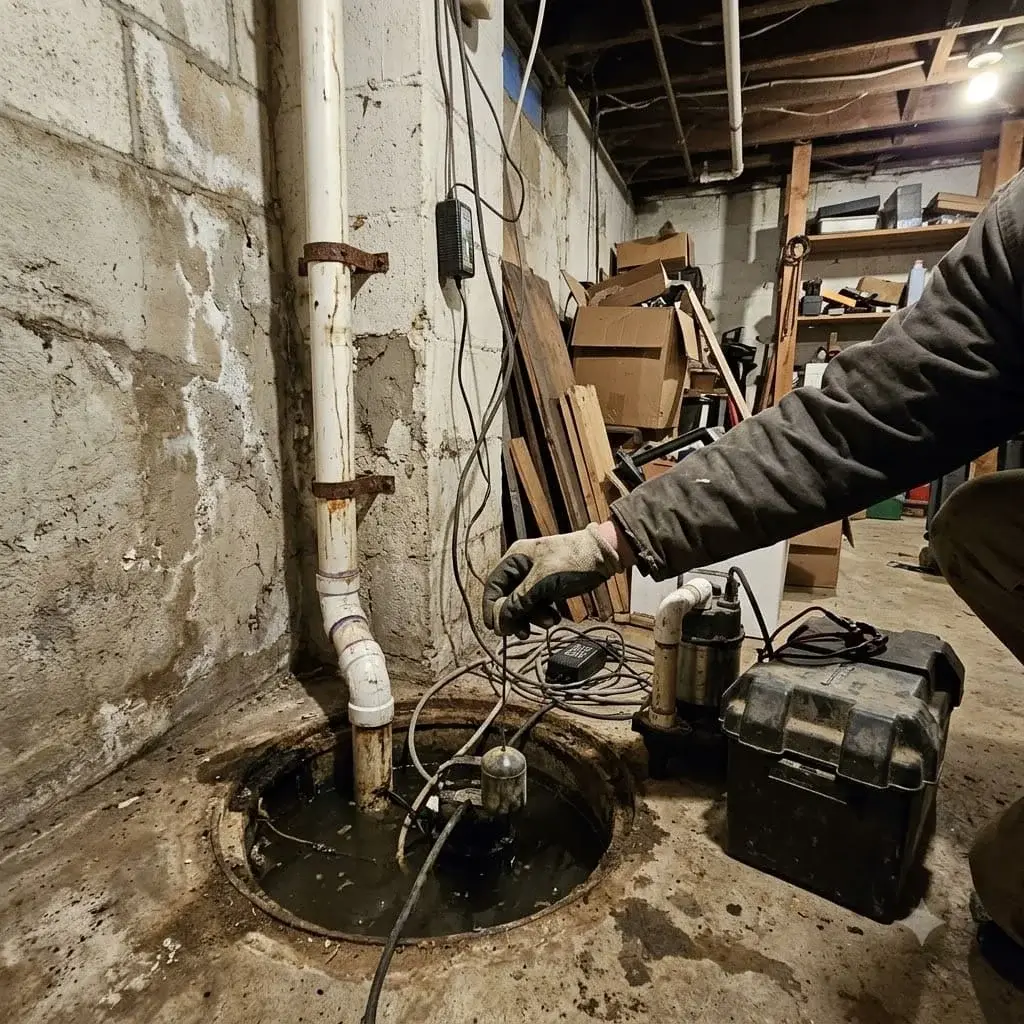
Testing takes a few minutes. First, check that the pump is plugged in and the outlet is working. Second, pour a bucket of water into the basin until the float rises. Third, watch that the pump starts, empties the basin, and shuts off. Fourth, walk outside and confirm the discharge line pushes the water out and away from the house. Test it before spring and after any long dry spell. If the pump doesn't start, or the water doesn't leave, it needs service.
What a Battery Backup Does
A battery backup is a second pump on its own battery that takes over when the power goes out or the main pump fails. It keeps the basin emptying through the storm and the outage. We include one in the plan we write for a Janesville home, because the storms that flood basements are the ones that cut the power. A backup doesn't replace maintenance. The battery needs checking, and the second pump needs the same test as the first.
When It's Time to Upgrade the System
If your pump runs constantly, never runs, or fails a test, the pump or the system may be undersized. A pump that runs all the time shows a lot of water reaching the foundation, and a properly sized pump with interior drainage along the footing handles it better than a single pit in the corner. A pump with a drain that has failed or silted up may need more than a replacement. We inspect the basin, the pump, the discharge, and the drainage together.
Frequently Asked Questions
Why did my sump pump stop working during a storm?
A sump pump usually stops in a storm because the power went out, the float stuck, the intake or discharge clogged, or the pump couldn't keep up. Power loss is the most common cause during heavy storms, because the same weather that floods a basement cuts the power. A battery backup keeps the basin emptying when the main pump has no power.
How do I test my sump pump?
Pour a bucket of water into the sump basin until the float rises, then watch the pump start, empty the basin, and shut off. Check that the discharge line pushes the water outside and away from the house. If the pump doesn't start or the water doesn't leave, it needs service. Test before spring and after any long dry spell, and test the battery backup the same way.
Do I need a battery backup sump pump?
A battery backup is the most important addition to a sump system, because the storms that flood basements can cut the power, and a standard pump stops when the power does. The backup runs on its own battery and keeps pumping until power returns. For a Janesville basement that takes on water during storms and spring melt, we include it in the plan.
How much does a sump pump cost in Janesville?
National cost guides published in 2026 put an installed sump pump at roughly $600 to $2,500. That's an average, not a Janesville quote. The price depends on the pump's size, the basin, the discharge line, and whether a battery backup is added. An on-site inspection gives the real number, and we put it in writing before work begins.
Why does my sump pump run constantly?
A sump pump that runs constantly is moving a lot of water, because the ground around the foundation is saturated or the drainage isn't keeping up. It can also mean a stuck float or a discharge line that sends water back toward the house. Heavy spring melt can make a pump run for days. If it never rests, call 123-456-7890 and we'll inspect the pump and the water source.
Sump Pump Not Keeping Up?
If your Janesville sump pump has failed, runs constantly, or has no battery backup, call 123-456-7890 for a free inspection. We'll check the pump, the discharge, and the drainage and write up the fix. See our page on basement waterproofing in Janesville for how we work.