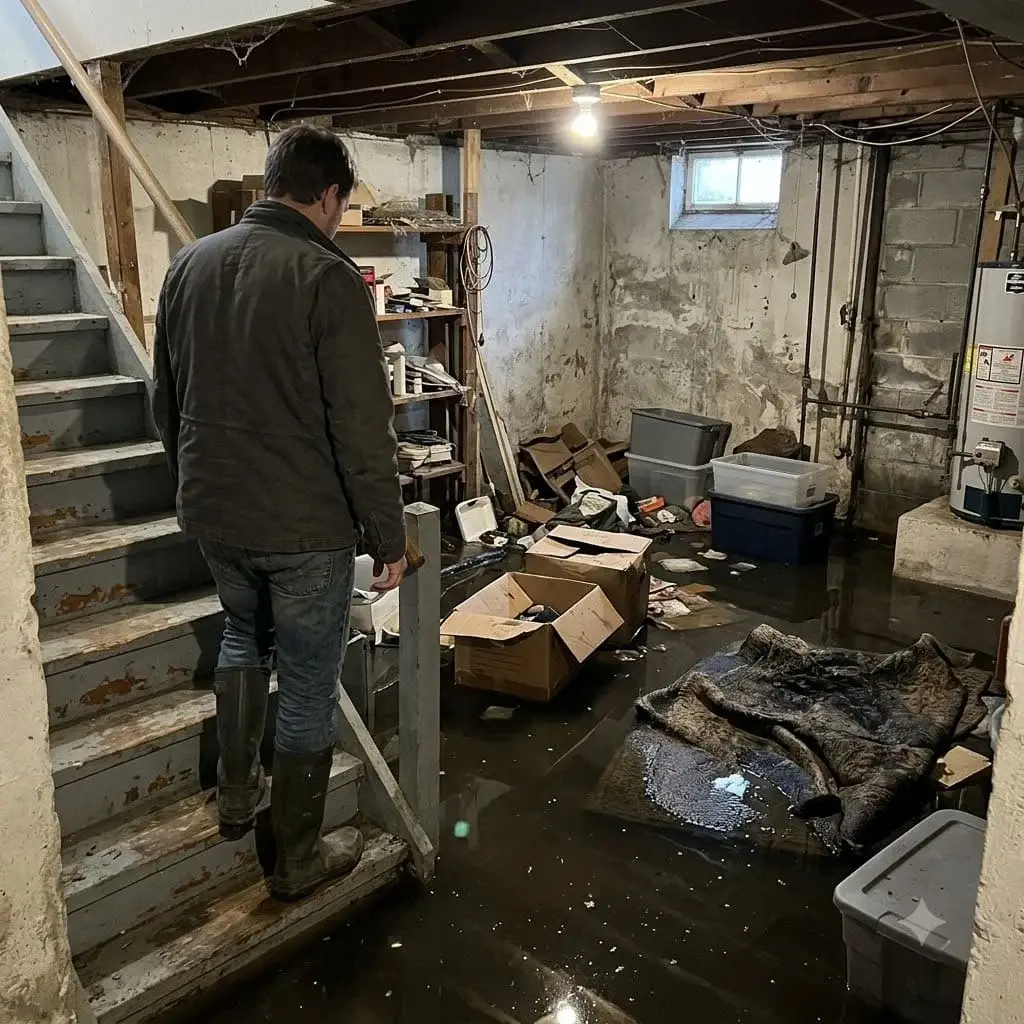
The EPA says that if a flooded area can't be dried within 24 to 48 hours, you should assume mold is growing. So the first day after a basement floods sets how big the cleanup gets. After the April 17, 2026 flash flood sent storm runoff into Janesville basements, cleanup companies worked around the clock for days, and the National Weather Service reported numerous water rescues in the Janesville area. Here's what to do, in order, if water is in your basement now.
First: Make It Safe
Before anything else, check for electrical and gas hazards. Standing water and live electricity are a deadly combination. If water is near outlets, the panel, or appliances, stay out of the water and turn off power only if you can reach the breaker without stepping into water. If you can't, call your utility or an electrician. If you smell gas, leave the house and call the gas utility from outside.
Don't enter a flooded basement if the water is deep or you can't see the floor. Water can hide hazards, and a basement full of water is heavy on the walls.
Second: Find Out What the Water Is
The source sets the risk. Clean groundwater or rainwater is a drying problem. Water that came up through a floor drain or toilet may be sewage, and it carries bacteria. Treat sewage as contaminated: don't handle it without gloves, boots, and protection, and call a professional for the cleanup. Contaminated water on porous materials like carpet and drywall means those materials come out.
Third: Document Before You Move Anything
Take photos and video of the water line, the damaged items, and where the water entered. Write down the date and time and what you see. Your insurer will ask, and the record helps whatever the policy covers. Standard homeowners policies often exclude groundwater, flood, and sewer backup, so ask your insurer what applies before you throw anything away, and keep damaged items when you can.
Fourth: Remove the Water and Dry Fast
First, remove standing water with a pump or wet vacuum, working down in stages if the water is deep so the walls don't take sudden outside pressure. Second, run fans to move air across wet surfaces and a dehumidifier to pull moisture from the air. Third, take out anything wet that can't be cleaned and dried completely, such as soaked carpet, padding, and cardboard. Fourth, check back in the first two days, because the EPA advises assuming mold if flooded areas aren't dry within 24 to 48 hours.
Fifth: Trace Where It Came In
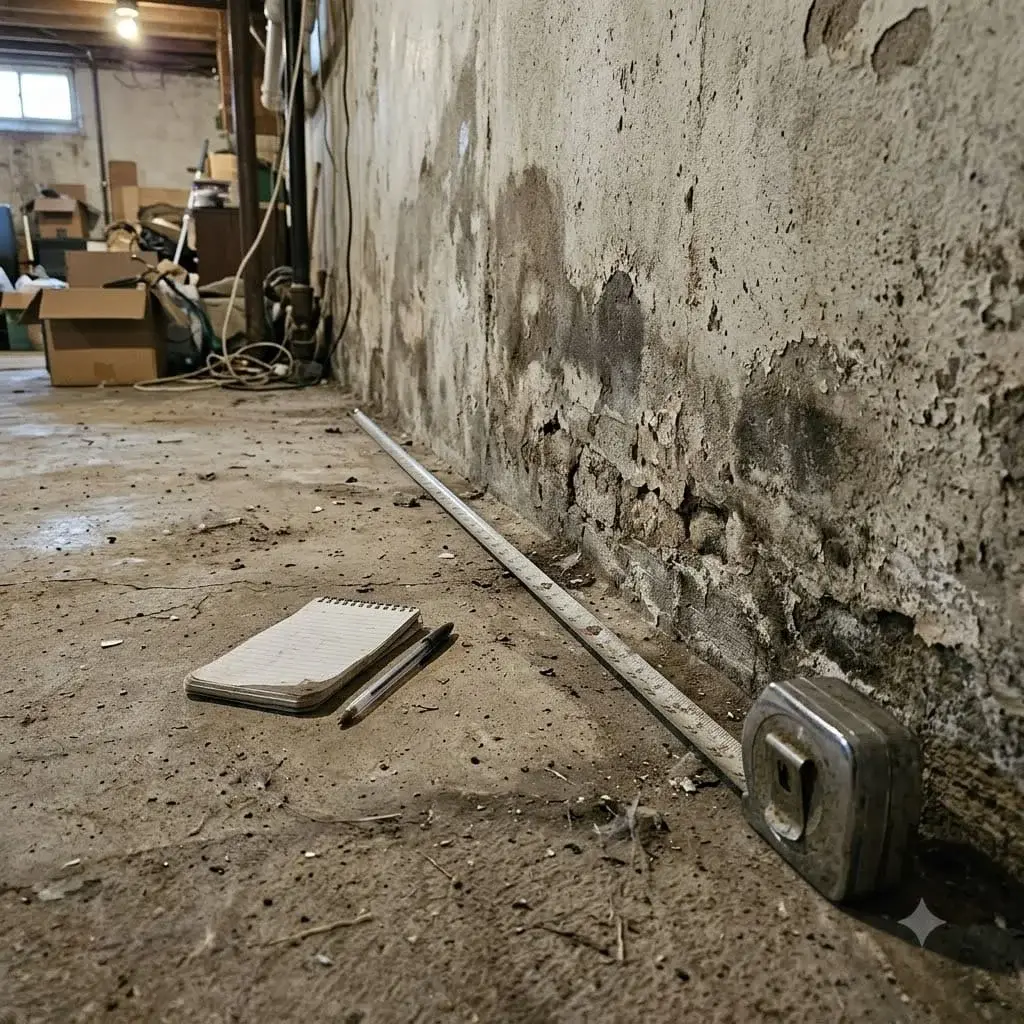
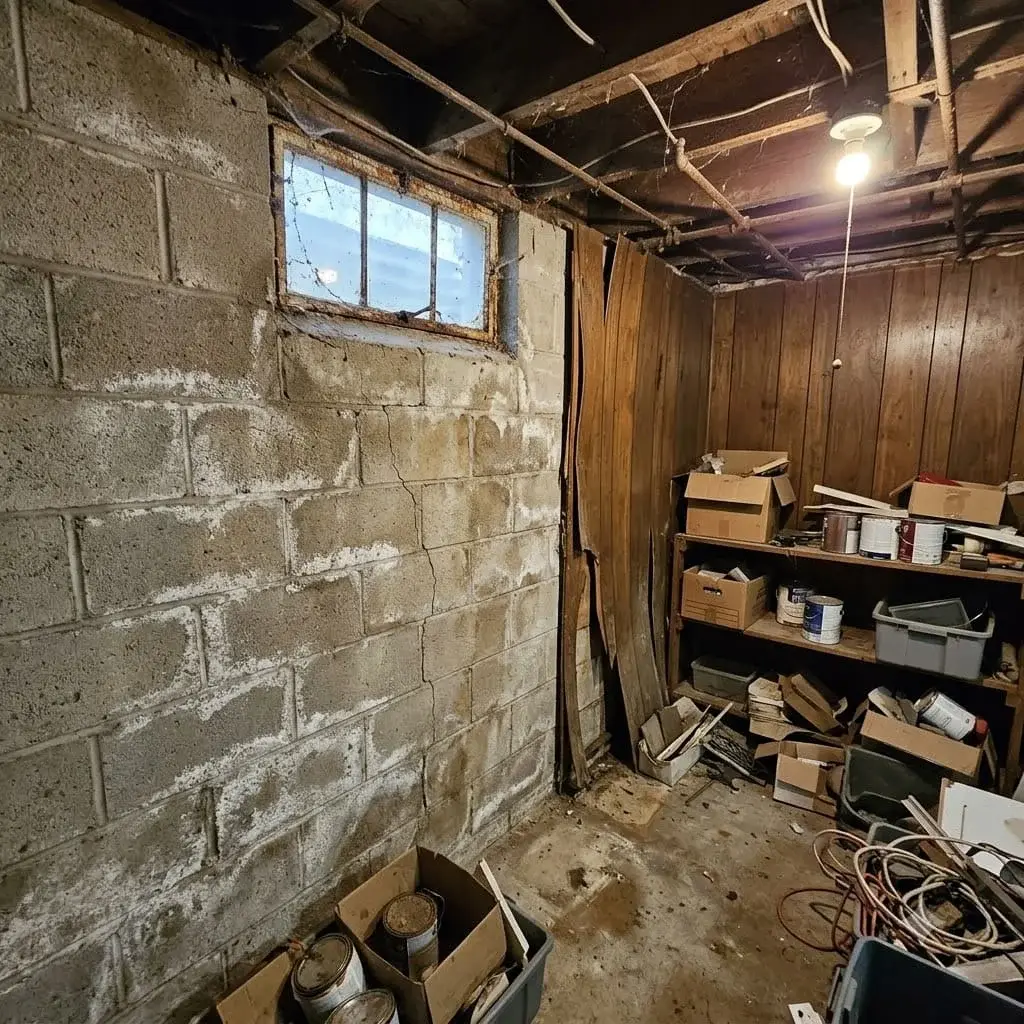
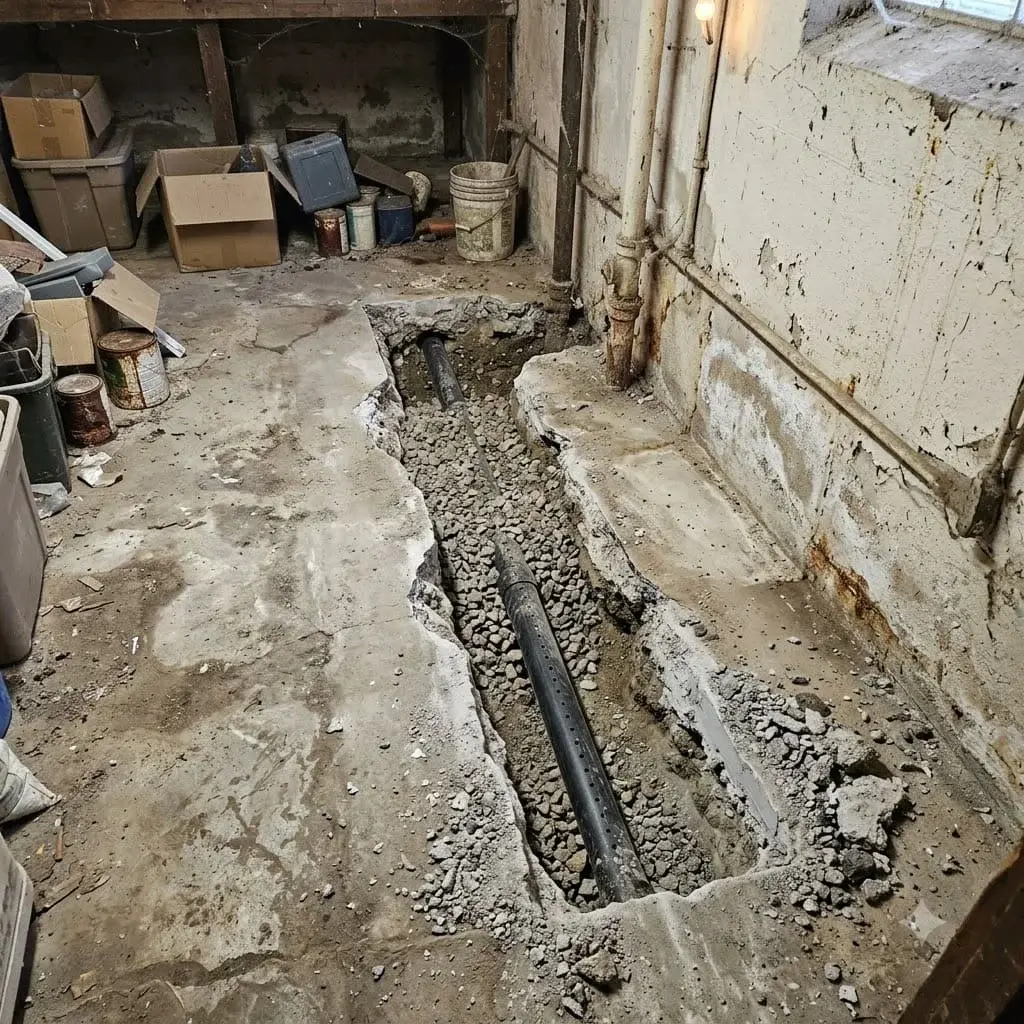
Drying fixes today's problem. Tracing the entry point fixes the next flood. Look at the floor-wall seam, cracks, the base of block walls, window wells, and floor drains. The same entry points let water in each time, so note where water first appeared. Interior drainage with a sump pump handles water from the floor joint, and a battery backup keeps the pump running through an outage. Walls that leaked through their face or cracked may need exterior waterproofing or wall repair. For the local flood picture, see our guide to Janesville flooding and the Rock River.
Frequently Asked Questions
What should I do first when my basement floods?
Make the basement safe first by checking for electrical and gas hazards. Stay out of standing water if outlets, the panel, or appliances are submerged, and turn off power only if you can reach the breaker without stepping in water. If you smell gas, leave and call the gas utility from outside. After that, remove the water, document the damage, and start drying.
How long do I have to dry a flooded basement?
The EPA says to dry a flooded area within 24 to 48 hours and to assume mold is growing if you can't. Remove standing water, run fans and a dehumidifier, and take out materials that can't be cleaned and dried completely, like soaked carpet and padding. The faster a basement dries, the less mold gets a foothold.
Should I take photos before cleaning up?
Take photos and video before you move or throw anything away. Record the water line, the damaged items, and where the water came in, with the date and time. The record supports an insurance claim for whatever your policy covers. Ask your insurer what applies before discarding items, and keep damaged belongings when you can.
Is a flooded basement covered by homeowners insurance?
Most homeowners insurance excludes flood and groundwater, and many policies exclude sewer and drain backup unless you add an endorsement. A sudden internal failure, like a burst pipe, is more often covered. The federal flood insurance program's FloodSmart site states that most homeowners insurance does not cover flood damage. Ask your insurer which cause applies to your loss.
How do I stop my basement from flooding again?
Stopping a repeat flood means finding where the water came in and fixing that path. Interior drainage and a sump pump with a battery backup handle groundwater at the floor joint and the base of the walls, exterior waterproofing handles walls that leak through their face, and grading and downspouts reduce surface runoff. Sewer backups need a plumber. Call 123-456-7890 and we'll trace the entry point and write up the fix.
Flooded in Janesville? Call for an Inspection
Once the water is out and the basement is drying, call 123-456-7890 for a free inspection. We'll find where the water came in and write up the fix. See our page on basement waterproofing in Janesville for how we work.