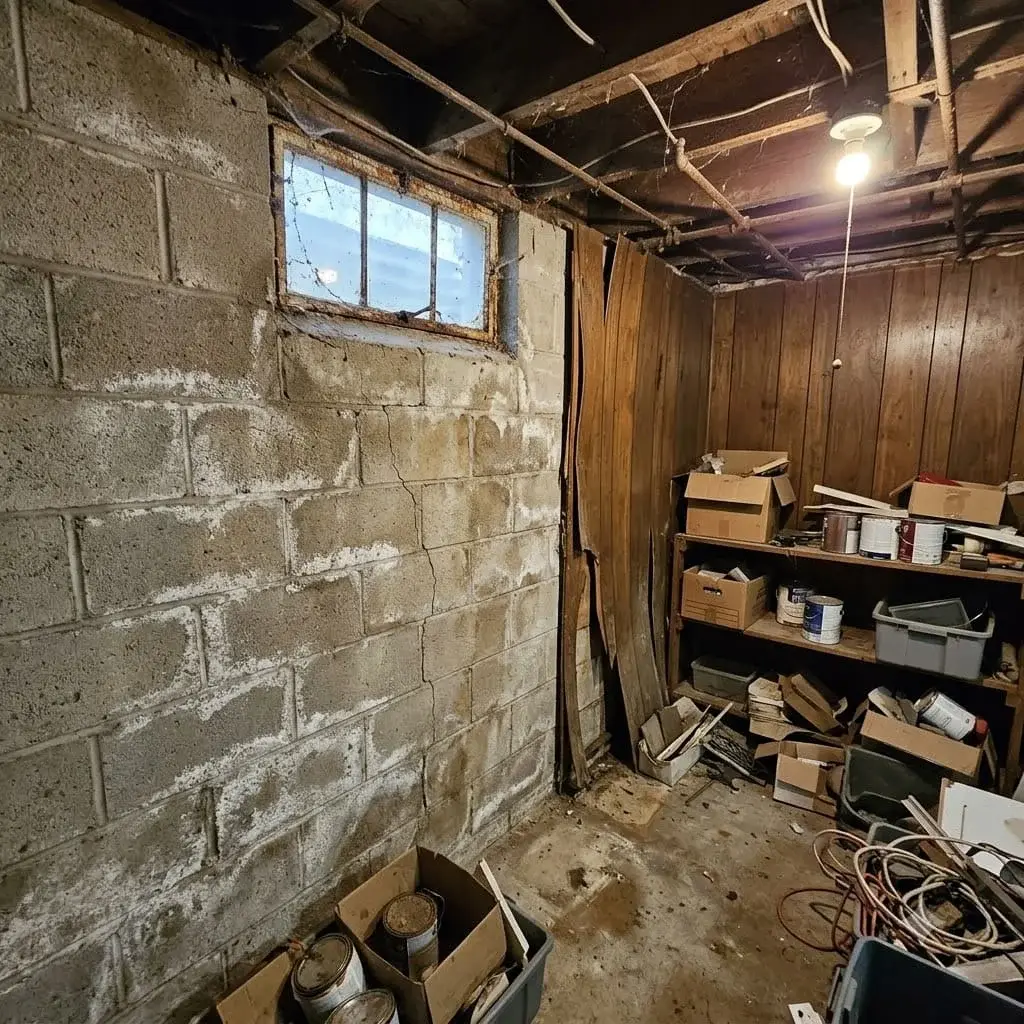
About 28% of Janesville's occupied homes, 8,298 of 29,204, were built between 1960 and 1979, making that the largest single group in the city, according to the Census Bureau's American Community Survey. Another 27% date to before 1960. That mix means a lot of Janesville basements went in before modern drainage, and the problems they have are predictable.
Janesville's Housing at a Glance
Janesville's housing isn't one era. The Census Bureau's American Community Survey breaks it down this way for the city's occupied homes.
| Built | Share of occupied homes |
|---|---|
| 1939 or earlier | About 12% |
| 1940 to 1959 | About 15% |
| 1960 to 1979 | About 28% |
| 1980 to 1999 | About 22% |
| 2000 or later | About 22% |
About 27% were built before 1960 and about 56% before 1980. These are survey estimates with margins of error, so read them as a picture of the housing, not an exact count. The point for a basement owner is that more than half the city's homes predate 1980, and many of those basements were built when waterproofing was an afterthought.
How Basements Were Built in That Era
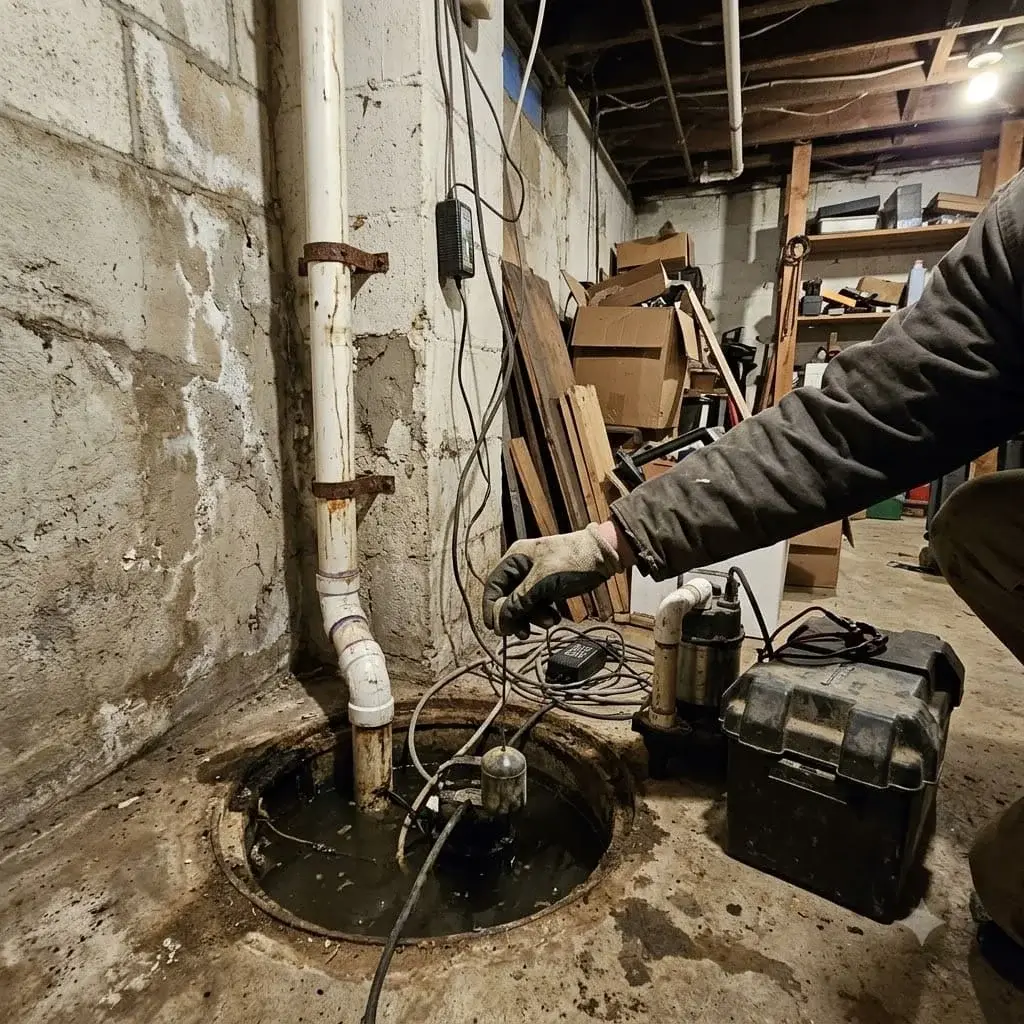
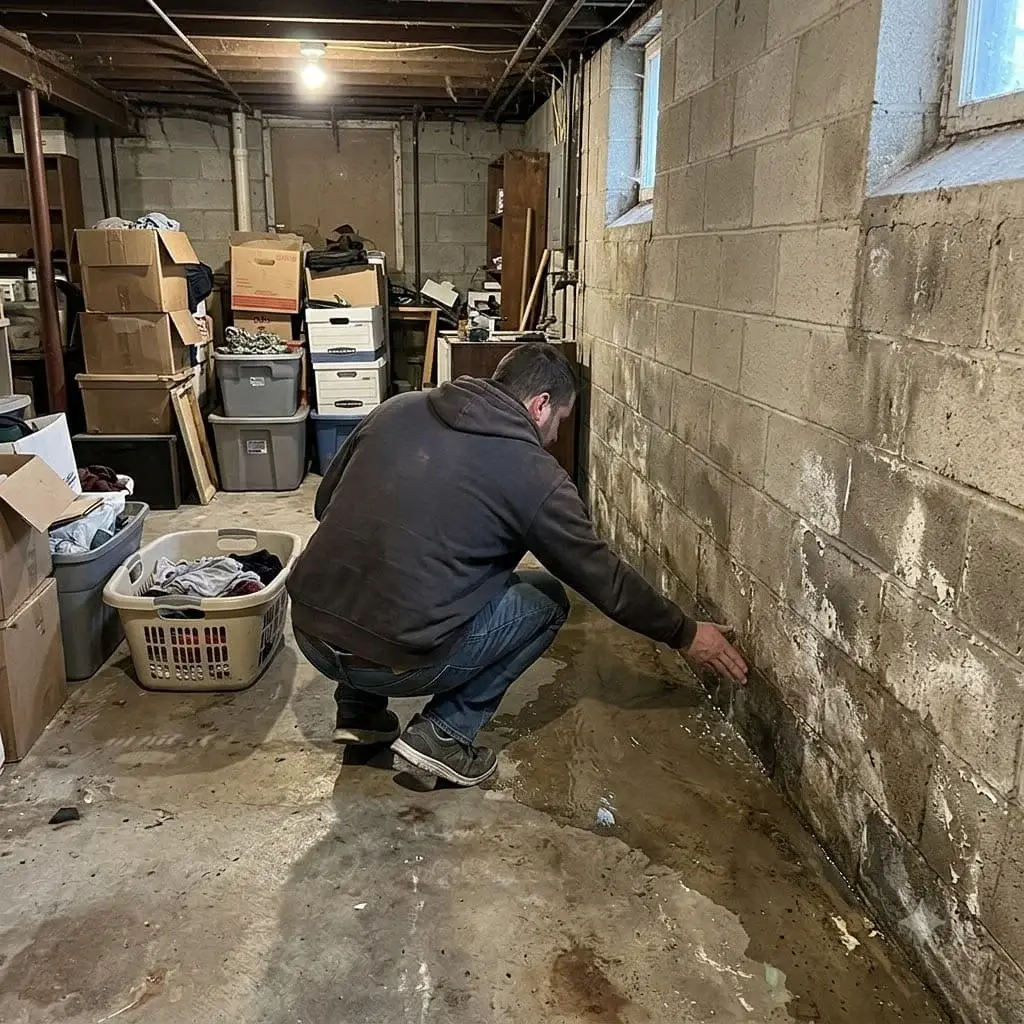
Basements of that era were built to hold the house up, and keeping water out came second. Concrete block and poured concrete were both common. Block walls are hollow and porous, and water seeps through the mortar joints and collects inside the cores. Poured walls resist water better but crack as they age, and water gets in through the cracks and at the seam where the wall meets the floor. Many of these basements had little or no drainage along the footing and no sump pump, or had one pit in the corner meant for occasional water.
Common Problems in These Basements
Basements from this era show a recognizable set of issues.
- Water at the floor-wall seam after heavy rain or snowmelt
- Efflorescence, the white chalky residue on block and concrete where water has moved through
- Cracks, horizontal, vertical, or stair-step, that widen over time
- A musty smell from humidity held in porous masonry
- Aging sump systems, with a single pump, no battery backup, or a pump that has worn out
- Window wells that fill and leak
None of these mean the house is failing. They mean the basement is doing what basements of that era do when the ground around them takes on water.
What the Weather Does to Them
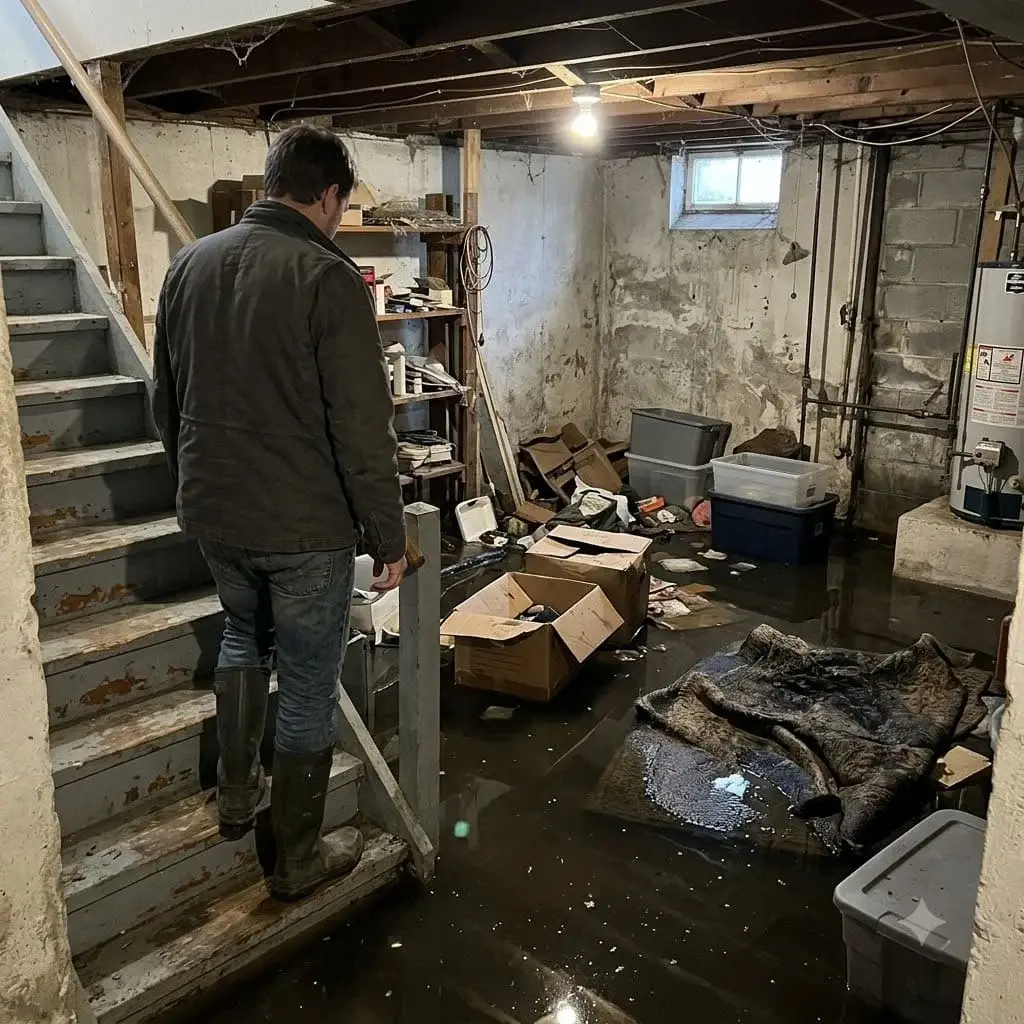
The Afton-Janesville weather station records about 37 inches of precipitation and about 37 inches of snow in an average year. March through June brings about 14.7 inches of precipitation, and March crosses freezing almost every day, with an average high near 45°F and a low near 25°F. That's a lot of water and a lot of freezing on walls that were never sealed. A hairline crack in fall can be a steady leak by spring. The April 17, 2026 flash flood sent storm runoff into Janesville basements, and walls with no drainage behind them take that hardest. For the freeze-thaw side, read our guide to spring snowmelt and freeze-thaw.
What Works on These Basements
Managing the water works better than coating the wall. Surface sealers and waterproofing paint fail on block and older concrete because they can't relieve the pressure behind the wall. Interior drainage with a sump pump and battery backup collects water at the footing and pumps it out, and weep holes let water inside block walls drain into it. Walls that have cracked or started to bow need wall repair, paired with drainage so the load behind the wall drops. When a wall leaks through its face or a footing drain has failed, exterior waterproofing stops the water at the wall.
Frequently Asked Questions
Why does my 1960s or 1970s basement leak?
A basement from that era leaks because it was built with little drainage, and water pressure from saturated ground pushes through block joints, cracks, and the floor-wall seam. About 28% of Janesville's occupied homes were built between 1960 and 1979, and many have block or poured walls with no footing drain and one basic pump. The leak is a sign water has found the weak points, and drainage takes the pressure off.
Is a damp basement normal in an older home?
A damp basement is common in an older home, because the walls were never sealed and the ground around them takes on water in wet weather. It's normal in the sense that it's expected, and it's not something you have to live with. Interior drainage and a dehumidifier keep a basement from the 1960s or 1970s dry and usable, and wall repair handles walls that have moved.
Can a block foundation be waterproofed?
A block foundation can be kept dry by managing the water, not by coating the wall. Block is hollow and porous, so a surface sealer can't hold back the pressure. Weep holes in the bottom course let water inside the block drain into an interior system along the footing, and a sump pump sends it outside. That works however porous the block is. Cracked or bowing block needs wall repair as well.
What does the white powder on my basement wall mean?
White chalky powder on block or concrete is efflorescence, mineral residue left where water has moved through the wall and evaporated. It marks a path water has taken, and it shows moisture is getting in even when the wall looks dry. The powder is a symptom. Scrubbing it off doesn't stop the water, and drainage that lowers the pressure behind the wall does.
Will fixing my basement increase my home's value?
Fixing a wet basement protects a home's value and can improve it, because it removes a problem buyers and inspectors flag. A dry, usable basement adds functional space, and it prevents the water damage, mold, and wall movement that lower a home's value over time. A documented drainage system with a battery backup is a selling point in a city where more than half the homes predate 1980.
Own a Janesville Home From This Era?
If your 1960s or 1970s Janesville basement leaks, smells musty, or has cracks that keep widening, call 123-456-7890 for a free inspection. We'll find where the water comes in and write up the fix. See our page on basement waterproofing in Janesville for how we work.